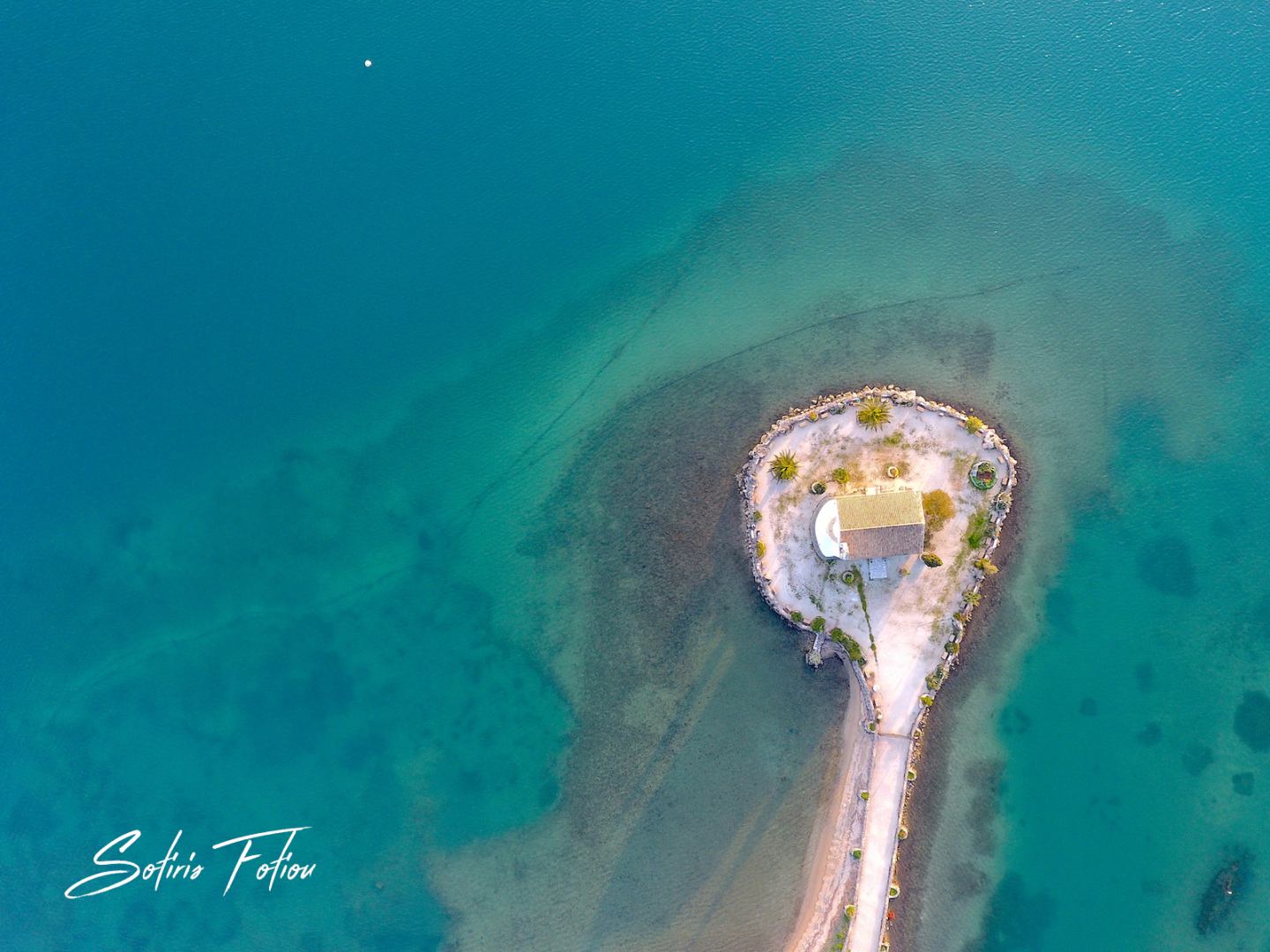
Aerial view of a small chapel on an island in Corfu's turquoise waters

Easter in Corfu: traditions, Botides, and a Holy Week you won't forget

Corfu does Easter differently. The Old Town fills with brass bands, candlelit processions wind through narrow streets, and on Holy Saturday morning, clay pots come crashing down from every balcony. It is one of the most vivid celebrations in all of Greece and it stays with you long after you leave.

Local traditions, practical tips, and where to stay

Why Easter in Corfu is different

There is nothing quite like it anywhere else in Greece.

Most Greek islands celebrate Easter with midnight fireworks and spit-roasted lamb. Corfu does too but it adds layers that go back centuries. The Venetian influence left the island with a rich tradition of philharmonic music, and during Holy Week, brass bands become the soundtrack of the town. They march through the tight alleys of the Old Town, playing funeral marches on Good Friday and triumphant pieces on Saturday night.

Then there is the setting itself. Corfu Town is a UNESCO World Heritage Site, with Venetian fortresses, arcaded walkways (the famous Liston), and stone squares that become natural amphitheatres for the processions. When hundreds of locals carry the Epitaph through the streets on Good Friday evening, with candles flickering against old stone walls, you understand why people return every year.

And, of course, there are the Botides the joyful, chaotic moment on Holy Saturday morning when the First Resurrection is declared and Corfiots hurl enormous clay pots from their upper floors. It is loud, spectacular, and utterly unique.

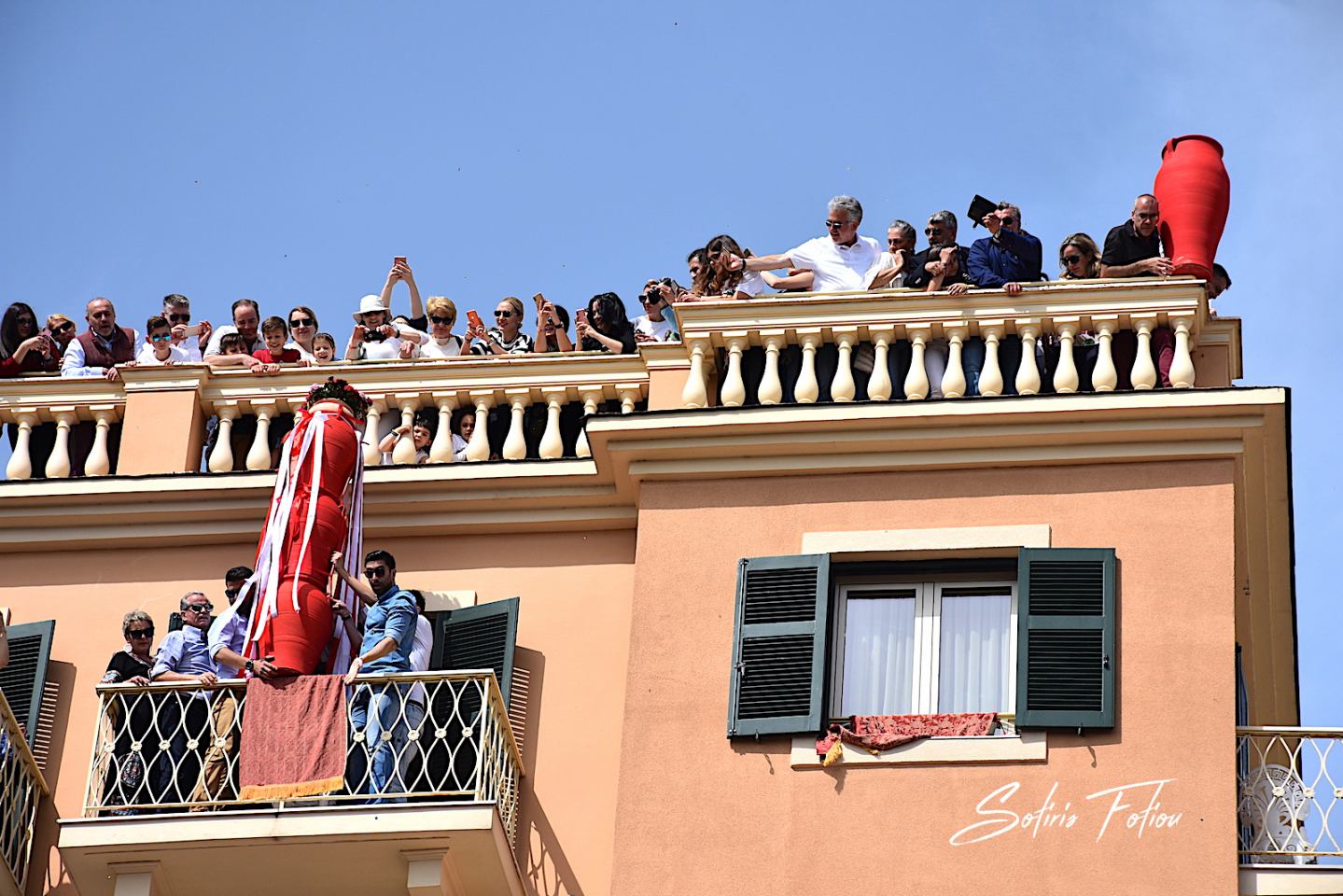
Locals preparing to throw clay pots from a rooftop in Corfu Old Town during the Botides tradition
Botides: pots ready to fly from the rooftops of Corfu Old Town
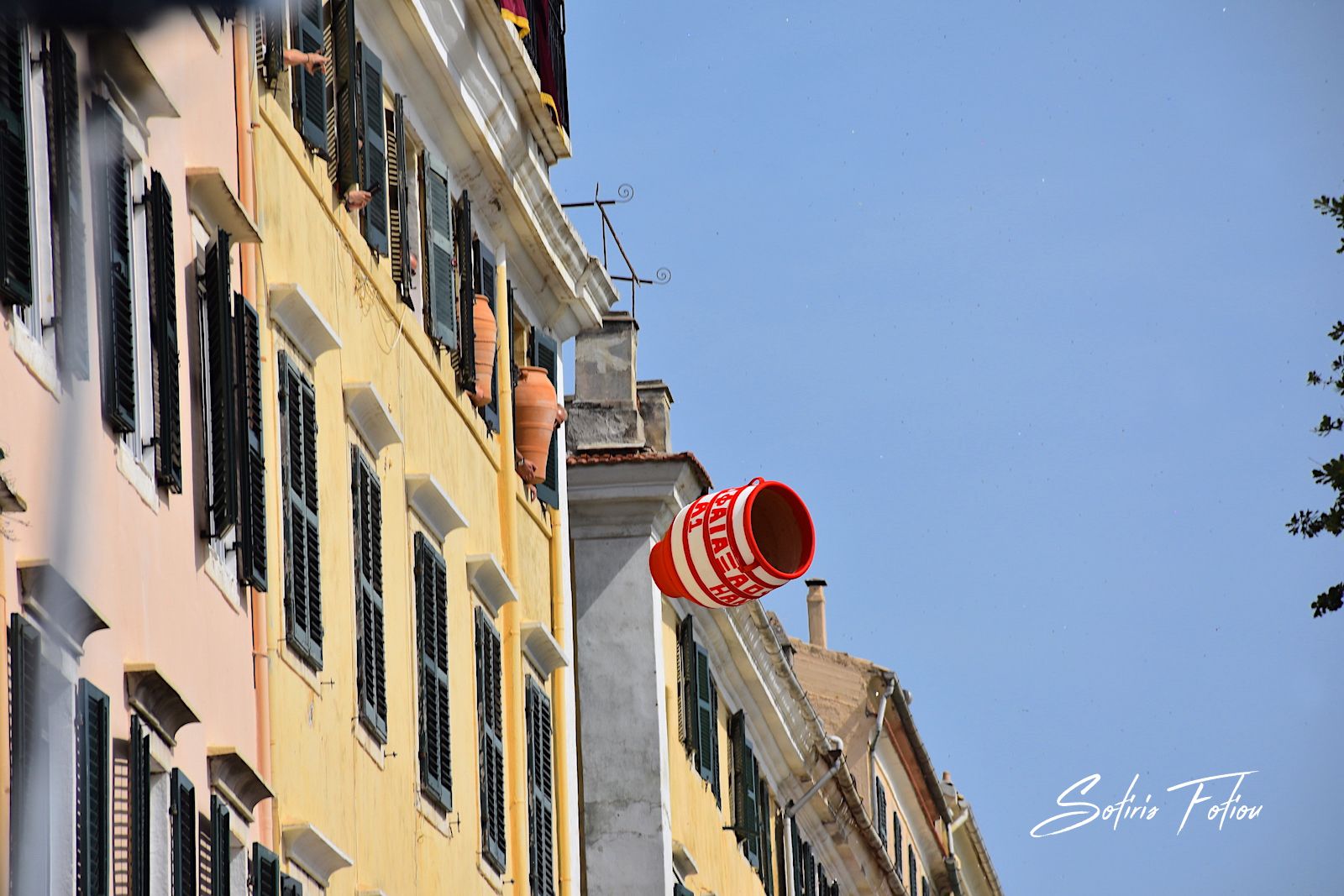
A clay pot mid-air during the Botides tradition in Corfu, thrown from a Venetian-era building
A pot in mid-flight between the Venetian buildings

Photos by Sotiris Fotiou

The signature moments

Three traditions that define Easter in Corfu.

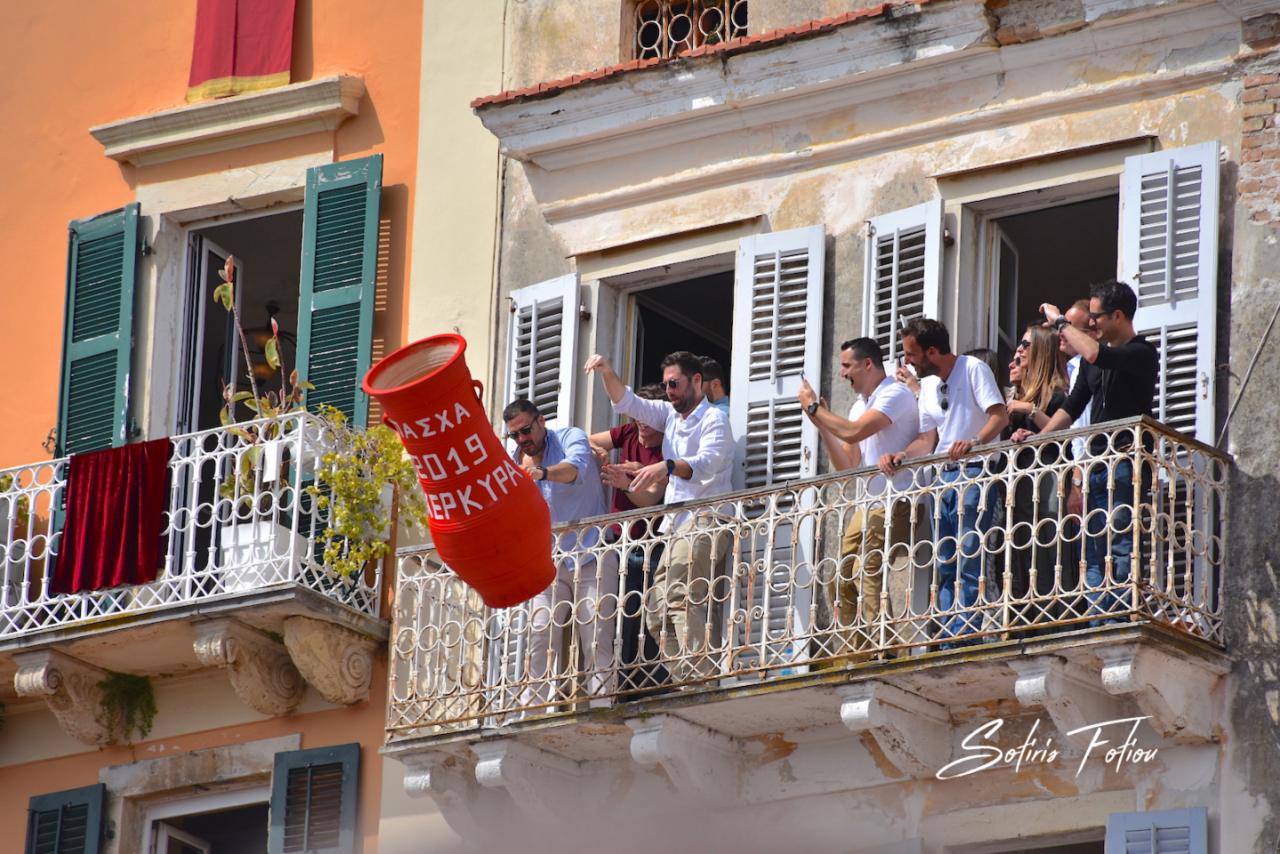
People throwing a large red clay pot from a balcony during the Botides tradition in Corfu

Botides

On Holy Saturday morning, Corfu's most dramatic custom unfolds. At the moment of the First Resurrection, locals throw large clay pots from balconies and windows, sending them smashing onto the streets below. The crash is deafening and thrilling. The tradition represents renewal, breaking the old to welcome the risen. Thousands gather along the Liston and Spianada to watch.

  • Happens around 11 a.m. on Holy Saturday (times may vary)
  • Best viewed from Spianada square and the Liston promenade
  • Keep a safe distance from buildings during the pot-throwing
Good Friday Epitaph Processions

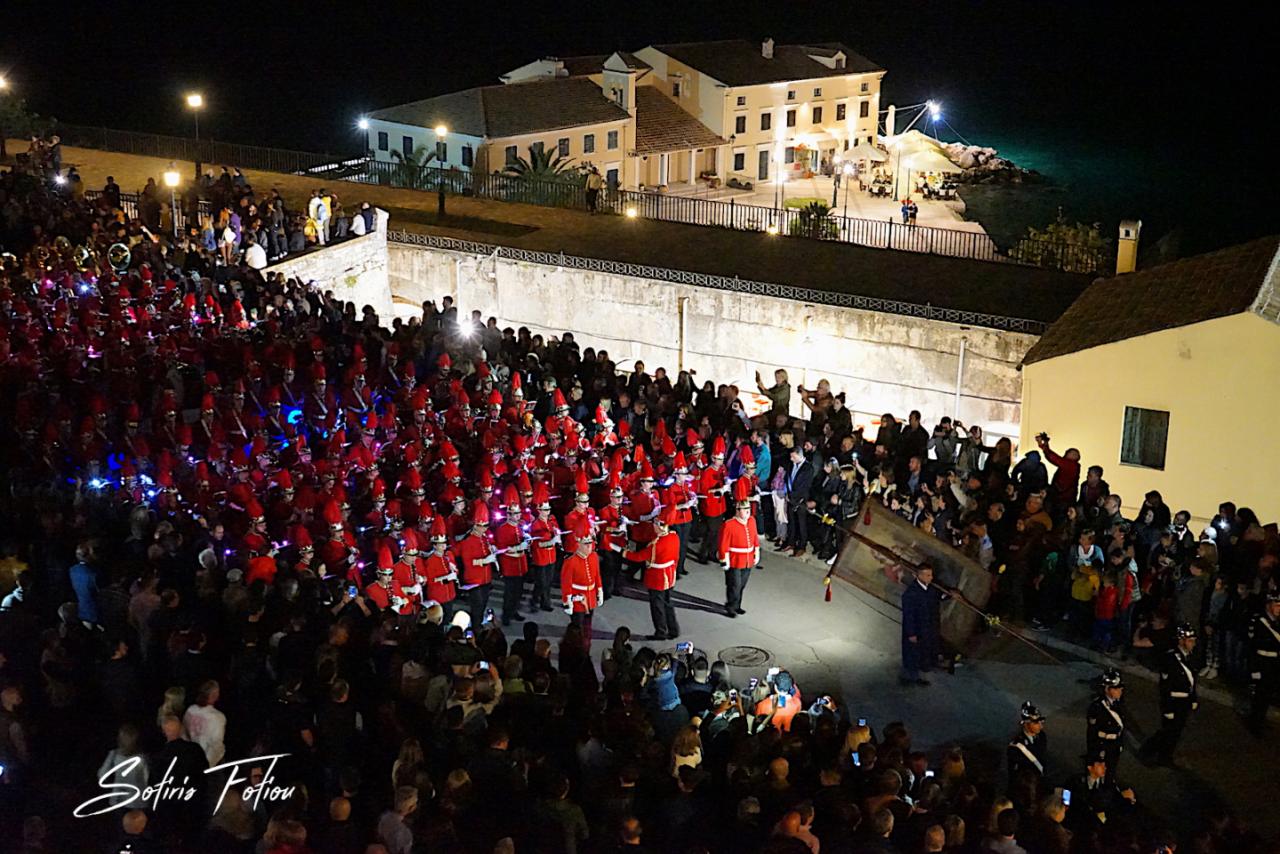
Good Friday in Corfu is unlike any other. Multiple Epitaph processions set out from the town's churches, each accompanied by a philharmonic band playing solemn funeral marches. Locals line the streets holding brown candles, and the sound of the brass echoing off stone walls is genuinely moving. The processions converge in the centre, creating an atmosphere that is part religious ritual, part communal mourning.

  • Several parallel processions from different parishes
  • Accompanied by Corfu's renowned philharmonic societies
  • Expect candlelit streets and deeply reverent crowds
Corfu's philharmonic band marching in red uniforms at night during an Easter procession

Philharmonic Bands

Corfu has the oldest philharmonic tradition in Greece, dating back to the early 1800s. During Holy Week, the island's brass bands are everywhere, marching through the town, playing at church doorsteps, filling the squares with sound. The music shifts from sombre marches on Good Friday to exuberant compositions by Saturday night. For many visitors, it is the unexpected highlight of the trip.

  • Corfu has at least 18 active philharmonic societies
  • Music ranges from Verdi and Mantzaros to traditional marches
  • Bands perform throughout Holy Week, not only on Good Friday

Typical Holy Week timeline

What to expect, day by day. Schedules and exact times vary each year.

Holy Thursday
Megali Pempti

The build-up begins

Churches hold evening services re-enacting the Last Supper and the reading of the Twelve Gospels. You will see the first Epitaph decorations being prepared, elaborate wooden structures adorned with flowers. The town has a quiet anticipation. Philharmonic bands may hold rehearsals in the squares, and you can catch short open-air performances in the evening.

Good Friday
Megali Paraskevi

Processions through the Old Town

The most moving day of Corfu's Easter. In the morning, church bells toll in mourning. By late afternoon, multiple Epitaph processions emerge from the town's churches, each with its own band playing funeral marches. The processions wind through the streets, converging in the town centre. Residents throw flower petals and hold candles. The atmosphere is solemn, emotional, and unforgettable.

Holy Saturday
Megalo Savvato

Botides in the morning, Resurrection at night

The morning belongs to the Botides. Typically around 11 a.m., the First Resurrection is announced, and the famous pot-throwing erupts across the Old Town. The sound is extraordinary. By late evening, the mood shifts entirely: at midnight, the Resurrection is celebrated with fireworks, candles, and the joyful chanting of "Christos Anesti" (Christ is Risen). Philharmonic bands play triumphant marches, and the whole town is alive.

Easter Sunday
Kyriaki tou Pascha

Feasting and family

Sunday is for eating. Lamb on the spit, red-dyed eggs, and long family meals are the order of the day. The town takes on a relaxed, festive energy. Some tavernas open by midday with special Easter menus. If you are staying nearby, take the chance to explore the quieter parts of the island while most locals are gathered at family tables.

Note: Schedules and exact times vary each year depending on the Orthodox calendar and local parish decisions. Check locally for the current year's programme.

Where to stay for Easter in Corfu

Your base matters. Here are the best options depending on what you are looking for.

Best for: being in the middle of it all

Corfu Old Town

This is where everything happens. Stay within the historic centre and you can walk to every procession, hear the bands from your window, and be at Spianada square in minutes for the Botides. Expect narrow streets, character-filled buildings, and a buzzing atmosphere throughout Holy Week.

Book well in advance. Old Town accommodation fills up fast for Easter.
Best for: quiet evenings, easy walks

Garitsa Bay

A peaceful waterfront neighbourhood just south of the Old Town. Garitsa is a 10-minute walk from Spianada, so you get the convenience of proximity without the intensity of staying right in the centre. Great for couples or anyone who wants a calm retreat at the end of the day.

Look for apartments along the seafront for views toward the Old Fortress.
Best for: families with young children

Kanoni & Perama

South of town, Kanoni offers green surroundings, views of Mouse Island, and a slower pace. It is far enough from the centre to feel relaxed but close enough (10–15 minutes by car or bus) to join the main events. Hotels here tend to have more space, pools, and gardens that younger children appreciate.

A car or scooter is useful here, especially for late-night returns from town.
Best for: easy access without the crowds

Mandouki & the New Port area

Just north of the Old Town, this area is walkable to the centre but far less crowded. You will find more affordable options here, and the walk into town takes about 12 minutes. It is practical and unpretentious. A solid choice if you want value and proximity.

Check ferry schedules if arriving by boat, this is where most ferries dock.
Best for: families wanting space and beaches

Gouvia & Dassia

Along the northeast coast, about 15–20 minutes from town by car. These areas have sandy beaches, a good range of family hotels, and a relaxed holiday feel. You can drive into town for the major events and return to a quieter spot. Works well if you want to combine Easter celebrations with a proper beach holiday.

A rental car is recommended. Parking in town during events can be limited.
Best for: a village atmosphere

Benitses

A small fishing village about 20 minutes south of Corfu Town. Benitses has its own quiet charm: a harbour, a handful of tavernas, and a slower rhythm. It runs its own smaller Easter celebrations too, which can feel more intimate than the big-town events. Good for anyone who prefers a genuine village experience.

Regular local buses run between Benitses and Corfu Town.

Your next step: find the right place to stay

Three ways to start planning your Easter in Corfu.

Villas in Corfu

Private villas with pools, gardens, and space to spread out. Ideal for groups and families who want independence during their stay.

Browse villas on Life Villas

Apartments in Corfu

Handpicked apartments for shorter stays and smaller groups. New listings coming soon. explore what is already available.

See apartments on My Corfu Apartment

Local tips & inspiration

Insider recommendations for restaurants, day trips, and hidden corners of Corfu from people who live on the island.

Explore I Love Corfu

Easter is one of the busiest weeks of the year in Corfu, and the best accommodation, especially in the Old Town, fills up months ahead. There is no artificial countdown here, just practical reality: the earlier you plan, the more choices you will have.

Practical travel tips for Easter week

A few things that will make your trip smoother.

Crowds and planning

Corfu Town gets genuinely busy during Easter, especially on Good Friday evening and Holy Saturday morning. Arrive early to secure a good spot for the Botides. Restaurants fill up. Consider booking ahead for dinner on Friday and Saturday.

Footwear and walking

The Old Town's streets are paved with smooth stone or cobblestones. Wear comfortable, sturdy shoes. You will be walking and standing for extended periods. Avoid heels. After the Botides, shards of pottery litter the streets, so closed-toe shoes are a must.

With kids

Keep children at a safe distance from buildings during the Botides, use the designated viewing zones. Bring ear protection for younger ones, as the pot-smashing is very loud. The processions on Good Friday can run late, so plan naps accordingly. On Sunday, many hotels and tavernas organise Easter egg hunts.

Respectful behaviour during processions

These are active religious ceremonies, not performances. Stand quietly as the Epitaph passes, avoid flash photography on Good Friday, and dress modestly if you plan to enter a church. Locals are welcoming, but they take the spiritual side seriously.

What to pack in spring

April in Corfu is mild but unpredictable. Expect temperatures between 14–22°C. Pack layers: a light jacket for evening, a scarf for church visits, sunglasses for daytime. Rain is possible, so a compact umbrella or light waterproof is wise. Sunscreen is useful if you plan to explore during the day.

Getting there

Corfu has its own international airport (CFU) with direct flights from many European cities during Easter season. Ferries connect from Igoumenitsa on the mainland (about 90 minutes). Book flights early. Easter week routes sell out quickly.

Frequently asked questions

Quick answers to the things people ask most about Easter in Corfu.

Botides (sometimes written as "Mpotides") is the tradition of throwing large clay pots from balconies and windows on Holy Saturday morning, around the time of the First Resurrection announcement. The pots smash on the streets below in a spectacular and very loud display. It symbolises the breaking of the old to make way for renewal. The main action is concentrated around Spianada square and the Liston, but you will hear (and see) it across much of the Old Town.

Absolutely. Children love the Botides, the bands, and the festive energy. Just take basic precautions: keep a safe distance from buildings during the pot-throwing, and bring ear protection for smaller children because the noise is intense. Good Friday processions run in the evening and can be long, so you might want to catch only part of them with younger kids. Easter Sunday is relaxed and family-focused, with feasting and egg-cracking.

If you are staying in or near the Old Town, no. Everything is walkable. In fact, many streets close for processions, making driving impractical. If your accommodation is further out (Gouvia, Dassia, Benitses), a rental car gives you flexibility, but expect limited parking near the centre during major events. Taxis and local buses are an alternative, though services can be stretched during peak times.

Corfu Old Town, without question. You will be within a few minutes' walk of Spianada square, the Liston, and the main churches where processions begin and end. Garitsa and Mandouki are also within comfortable walking range (10–15 minutes to the centre) and tend to be slightly quieter and more affordable.

At a minimum, arrive by Good Friday and stay through Easter Sunday. That gives you the main processions, the Botides, the midnight Resurrection, and the Sunday feast. If you can swing it, five nights (Holy Thursday through Easter Monday) is ideal. You will catch the full arc of the celebrations and have a day to decompress before heading home.

The processions are living religious ceremonies, not tourist attractions. Dress modestly (shoulders covered, avoid very short skirts or shorts), keep conversations quiet as the Epitaph passes, and avoid using camera flash on Good Friday evening. If you are standing along the route, stay still and let the procession pass before moving. Locals genuinely appreciate visitors who show respect for the occasion.

Easter in Corfu is one of those rare experiences that blends deep tradition with genuine spectacle. Whether you come for the music, the Botides, or simply the warmth of an island waking up in spring, it is a week that leaves a mark. Start planning early, choose your base wisely, and give yourself enough time to take it all in.

Find your place to stay in Corfu
Find a place to stay